
Bath County Bench Warrants Explained
People say bench warrant, but Virginia statutes and local case files usually say capias. Same idea, different word. A capias can follow a missed required appearance, a release-condition problem, an indictment, or any other court order bringing a person before the judge. What triggered yours depends on the file, so a general name search cannot tell you the next step. In Bath County, traffic and misdemeanor questions usually start with General District Court. Circuit Court handles felony trials and later felony process. Juvenile and domestic-relations matters run through the Combined Courts clerk, and those records are not publicly searchable online. Ask the clerk which label and which court apply to your situation.
Bath County Bench Warrants as Capias
Virginia's code uses capias for more than one kind of process. A failure-to-appear capias is not the same as a capias pro fine, which concerns collection of court-imposed fines and costs. Later or replacement process may carry a different label too. Bath County's public court pages publish no local glossary mapping every label to one status, so the clerk remains the authority on what your entry means.
- Capias
- An order directing an officer to bring a person before the court.
- FTA
- Failure to appear or comply; the court applies the rule for that case type.
- Recall
- The issuing court withdraws its process; confirm that action in the court record.
- Quash
- The court sets aside process, which does not by itself decide the underlying charge.
For statutory procedure, see Virginia's capias and summons provisions.
How Bath County Bench Warrants Are Issued
A judge or other authorized official picks the process under Virginia law and the facts of the case. A willful failure to appear after release can cost you your security and bring a capias under § 19.2-128. After a felony indictment, Circuit Court may issue a capias when the accused is not in custody. General District Court can use capias or summons in misdemeanor matters. Traffic-summons noncompliance follows its own rules. Magistrates in Judicial District 25 and Region 2 review complaints and hold bail hearings. They are not a separate trial court. Rather than assuming every Bath County bench warrant starts in one office, ask the clerk for your case court and process label.
Bath County Missed-Date Warrant Calls
Missed a traffic or misdemeanor date? Call the Combined Courts clerk at (540) 839-7241. The clerk can identify the case, say whether a capias or FTA entry appears, and explain whether you need a new appearance date, a judge's order, or an attorney request. The public schedule lists traffic and criminal matters on the first and third Wednesday. Never assume a docket time means you should just show up with an active warrant; call first. Give the clerk the case number and hearing date from your summons if you have them, and ask whether the clerk can set a new date for a first continuance requested in advance or whether the judge must act. The court's own page describes its clerk and schedule. Open the Bath Circuit Court contact page for felony or Circuit matters; use Combined Courts for a General District case in Bath County.
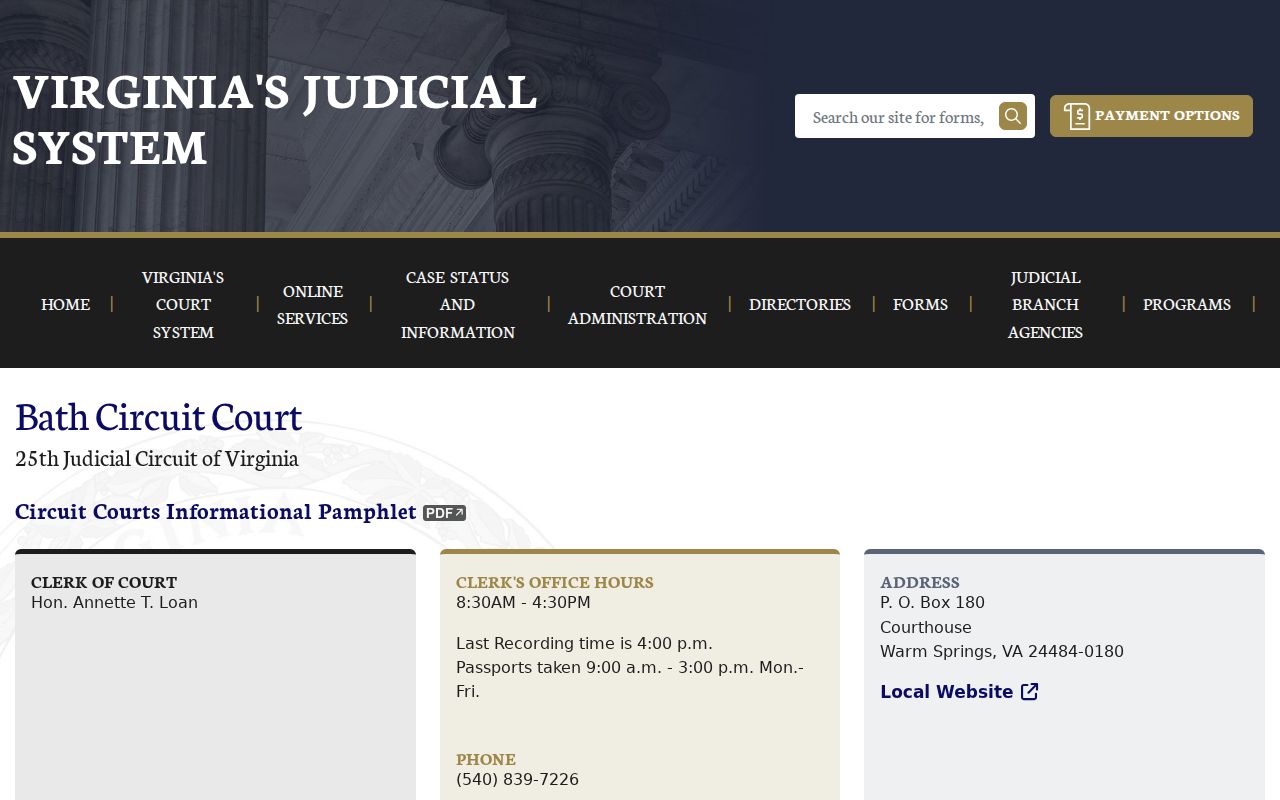
That link leads to the official Circuit Court page. For a GDC matter in Bath County, use the Combined Courts clerk instead.
Bench Warrants and Arrest Warrants Compared
Both kinds of process can end in arrest, but they serve different purposes at different stages. An arrest warrant authorizes custody after a probable-cause review of a criminal complaint. A bench warrant or capias directs a person to court, often after a missed appearance or a later procedural event. In every Bath County case, the issuing court controls the resolution route. The label alone will not tell you whether bond is due or whether a new date is allowed.
| Question | Arrest warrant | Bench warrant / capias |
|---|---|---|
| Common reason | Probable cause for an alleged offense | Missed appearance, release issue, or later court process |
| Who issues | Authorized magistrate, judge, or clerk | Judge or court under the case procedure |
| Bath contact | Issuing clerk and Sheriff for service | Clerk for the court date or balance |
| What clears it | Court action, appearance, or other case-specific order | Recall, reset, appearance, payment, or other court direction |
Never assume the label alone tells whether bond is due or whether a Bath County court will allow a new date.
Bath County Felony Capias Check
A felony indictment or circuit-stage case belongs with the Bath County Circuit Court Clerk. The clerk's record room sits on the first floor of the courthouse; the Circuit Court is on the second. Circuit files include older county records, and the office describes records dating to 1791. That long history does not put an unserved capias into a public web search, though. Call (540) 839-7226 or (540) 839-7227 and ask whether the process is active, whether counsel must request recall, and whether the court expects an appearance or bond. Circuit fines and costs follow a separate payment policy. For JDR cases, contact the Combined Courts clerk, since public online detail is restricted.
Resolving a Bath County Bench Warrant
Only the issuing court can set another date, recall or quash process, accept payment, or require an appearance or bond. Call the clerk before driving to the courthouse. If the clerk says the Sheriff controls service or surrender, contact the Bath Sheriff's Department first. The Sheriff posts no walk-in surrender hours, surrender form, or fixed bond schedule, so the phone call is how Bath County residents learn their options.
- Identify the court, case number, and exact process wording.
- Ask the clerk which action is allowed and whether counsel should request it.
- Call the Sheriff before any voluntary appearance or travel.
- If custody follows, ask where the person will be held and how bail is set.
- After court action, request docket or written confirmation that process changed.
Do not guess at payment: a fine balance or online receipt does not prove a capias was recalled. Ask the issuing court what action closes the process.
Bath County Circuit Payments and Capias
Bath County Circuit Court handles qualifying fine-and-cost accounts through a written installment agreement. The clerk supplies the terms unless a judge orders otherwise. The plan opens with a $50 filing payment. Monthly payments run at least $50 after that. The clerk weighs the income and expenses each person reports when setting the figure. Restitution comes ahead of costs. Approved community service earns credit at $13.50 per hour. A past-due account can also pick up a one-time 17 percent fee. This policy is not a warrant bond schedule, though. One payment does not promise an automatic recall of a capias, so ask the Bath County clerk whether the case needs a separate appearance, motion, or judicial order. The official order spells out the arrangement: read the Bath Circuit installment policy, and check with that clerk before assuming the terms carry over to a General District case.
Finding the Issuing Court
Bath County splits court duties across three offices: traffic and misdemeanor questions go to Bath General District Court, circuit felony files sit with the Circuit Clerk, and the Combined Courts clerk handles JDR routing. Virginia law requires prompt presentation to a judicial officer for anyone arrested, so a bail decision comes quickly. Magistrates hear bail around the clock. Still, the Bath County pages list no location or direct phone for the local magistrate office. The Sheriff's Department sits beside the courthouse. It operates 24/7 for law enforcement and dispatch. No warrant counter or surrender window is published there. Call the Bath County Sheriff before visiting, since custody may go to Alleghany Regional Jail. Confirm the route with the agency. Ask the jail how the bond method works. For the wider court map and public contacts, see the Bath County warrant records overview.
JDR Bench Process Needs a Restricted Records Route
Bath County's General District and Juvenile and Domestic Relations courts share a Combined Courts clerk, but public search access stops at the district level. JDR information is not in the public online search. Confidentiality rules, not secrecy, drive that split. Juvenile law-enforcement records carry protections under Virginia Code § 16.1-301. A party, parent, or attorney should call the clerk about their own matter and ask what relationship or documents the court needs before any details are discussed. The clerk can route a question without publishing anyone's case information. One warning stands. A missing search result is not proof that JDR process is absent, so let the clerk answer that rather than the screen.